How publishers tread the line between discovery and monetization
Publishers are rebuilding revenue in a tougher market. Attention is fragmented. Ad blocking is routine. Privacy expectations are higher. And audiences have less patience for cluttered pages.
Sponsored content has become a practical answer. When it is done well, it fits the reading experience. It can earn engagement without leaning on invasive targeting. But it also carries risk. The closer paid content gets to editorial, the more publishers must protect trust, disclosure, and search compliance.
The publishers who win treat sponsored content as a product. They build it for intent. They distribute it with discipline. They prove its value with clear measurement. And they never forget the reader.
Why sponsored content still works
Sponsored content works because it can create value for three groups at once.
For publishers, it diversifies revenue beyond banners and auctions. It can also reduce dependence on personal data.
For advertisers, it offers context and credibility. It can answer real questions and meet people closer to intent.
For readers, it can be useful. That is the condition. Useful, relevant, and clearly labeled.
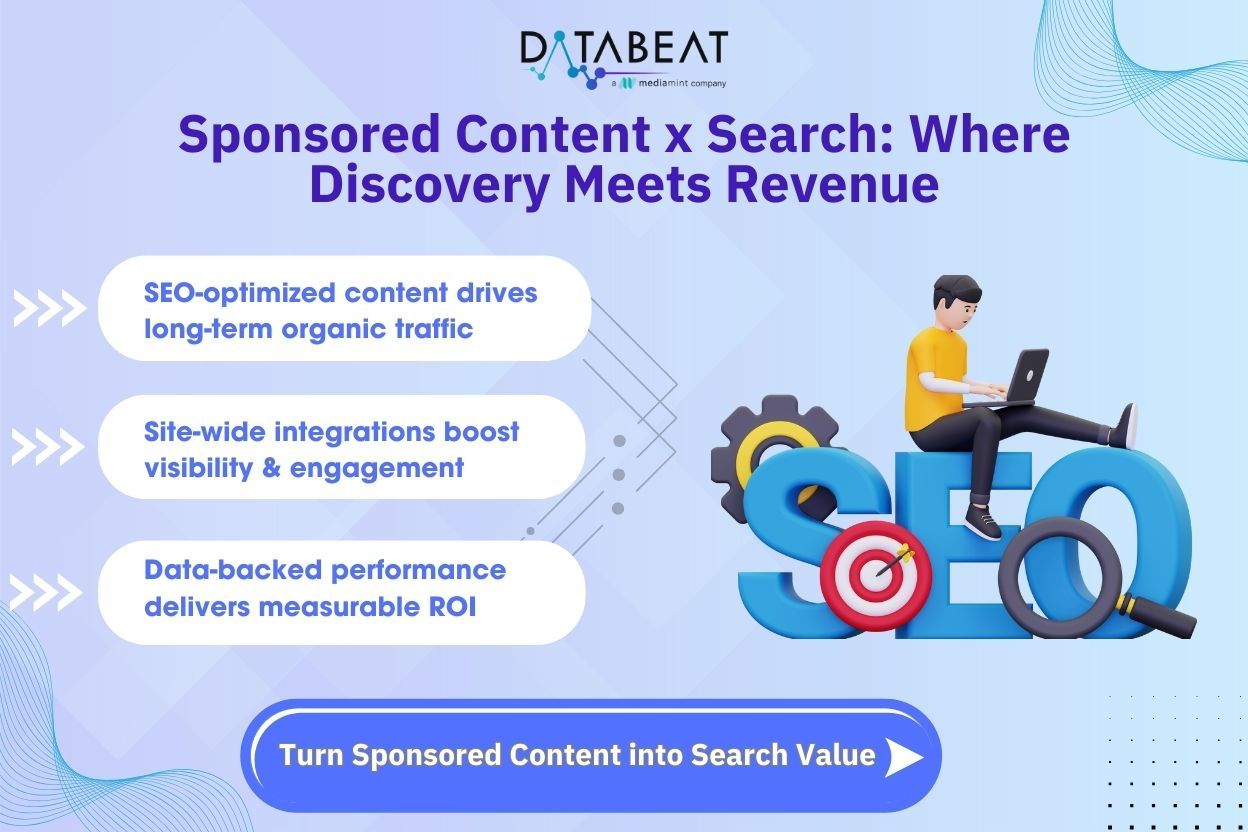
This is where search matters. Search is not glamorous, but it is steady. It remains one of the most reliable sources of intent traffic. If sponsored content earns organic discovery, it can keep working long after a campaign ends. That is where the model becomes durable.
The line publishers cannot cross
“Walking the line” is not a metaphor. It is a set of operating rules.
First, disclosure must be consistent and easy to see.
If readers feel tricked, you lose more than a click. You lose trust. Trust is hard to win back.
Second, editorial standards must apply.
Paid does not mean sloppy. Thin, salesy copy hurts the sponsor and the publisher. It also drags down the overall feel of the site.
Third, search compliance must be treated seriously.
Search engines have clear guidance on paid links and how they should be marked. Publishers should keep sponsored link handling clean and documented.
These guardrails do not slow you down. They let you scale without surprises.
The operator playbook
A good sponsored content program is not a pile of one-offs. It is a repeatable system. Here is what that system looks like when it is run well.
1) Start with intent, not brand messaging
Most sponsored content fails before it is written. The topic is wrong. It is built around what the brand wants to say, not what readers are trying to learn.
Good programs begin with intent mapping. Is the reader looking for a how-to? A comparison? A short list of options? A basic explainer? You can match that intent to a sponsor without forcing the fit.
This is also where keyword strategy matters. Pick themes that have clear demand and real utility. Then apply constraints. The sponsor must belong in the topic. The publisher must be able to add value. If either fails, walk away.
Evergreen topics often outperform newsy ones. They also invite refresh cycles. A sponsored guide that stays accurate can earn search traffic for months. Sometimes for years.
2) Treat SEO as production QA
Many teams treat SEO like a final checklist. That is why it breaks at scale. The better approach is to treat SEO like QA in a product workflow. Repeatable. Auditable. Owned.
At a minimum, an operator-grade standard includes:
- Clear structure with headings that help a reader scan
- Titles and descriptions written for relevance and click intent
- Internal linking that is natural and useful
- Clean technical setup so the page is indexable when intended
- Structured data only when it truly fits the content
You do not need tricks. You need consistency. You need to avoid shortcuts that create long-term risk.
3) Distribute on-site with restraint
Search is powerful, but you should not rely on it alone. On-site distribution can increase reach, and it can improve results when done with care.
Contextual hand-offs work well. A reader finishes a related editorial article and sees a clearly labeled partner story that fits the moment. That can be a “Recommended” unit or a partner module. The key is relevance and labeling.
Internal search integration can also work. If a user searches your site, and a sponsored story directly matches the query, it can earn a placement. Again, the label must be clear.
Site structure matters too. Sponsored content should live within the same topic ecosystem as editorial content. Not in an isolated graveyard. If it is useful, it deserves a place where people can find it.
You also need rules. Exclusions for sensitive categories. Frequency caps. Placement standards by section. These details protect the experience. They also protect your brand.
4) Measure outcomes, not just views
Advertisers still ask for impressions. That is fine. But most decision-makers now want proof of attention and action.
Publishers can lead with a balanced measurement set:
Discovery: organic impressions and clicks, query coverage, ranking distribution when available
Attention: engaged time, scroll depth, video completion where relevant
Action: outbound clicks, sign-ups, lead interactions, store-locator clicks, or other sponsor goals
The point is simple. Do not sell inventory. Sell qualified discovery and verified attention. Then report it with clarity. Define your metrics. Stick to the definitions. Make it easy to compare across campaigns.
What usually goes wrong
A few patterns show up again and again.
Disclosure that is inconsistent or too subtle.
Content that reads like a brochure.
Forced internal links that hurt the reading experience.
Reporting that stops at pageviews.
No plan to refresh evergreen assets.
Each of these problems is avoidable. Each one is also a reason renewals fail.
The durable model
The strongest model is sponsored content designed as discoverable utility. It respects the reader. It aligns with intent. It meets editorial standards. It follows search rules. And it proves its value with clean measurement.
Publishers who operate this way earn more than revenue. They earn stability.
How DataBeat helps
DataBeat supports publishers who want to run sponsored content like a search-driven product. It helps teams align topics to keyword intent, apply consistent SEO QA to every paid article, and integrate content into on-site distribution patterns that preserve labeling and user experience. It also packages reporting across discovery, attention, and action so publisher teams can price based on outcomes and defend value in renewals.