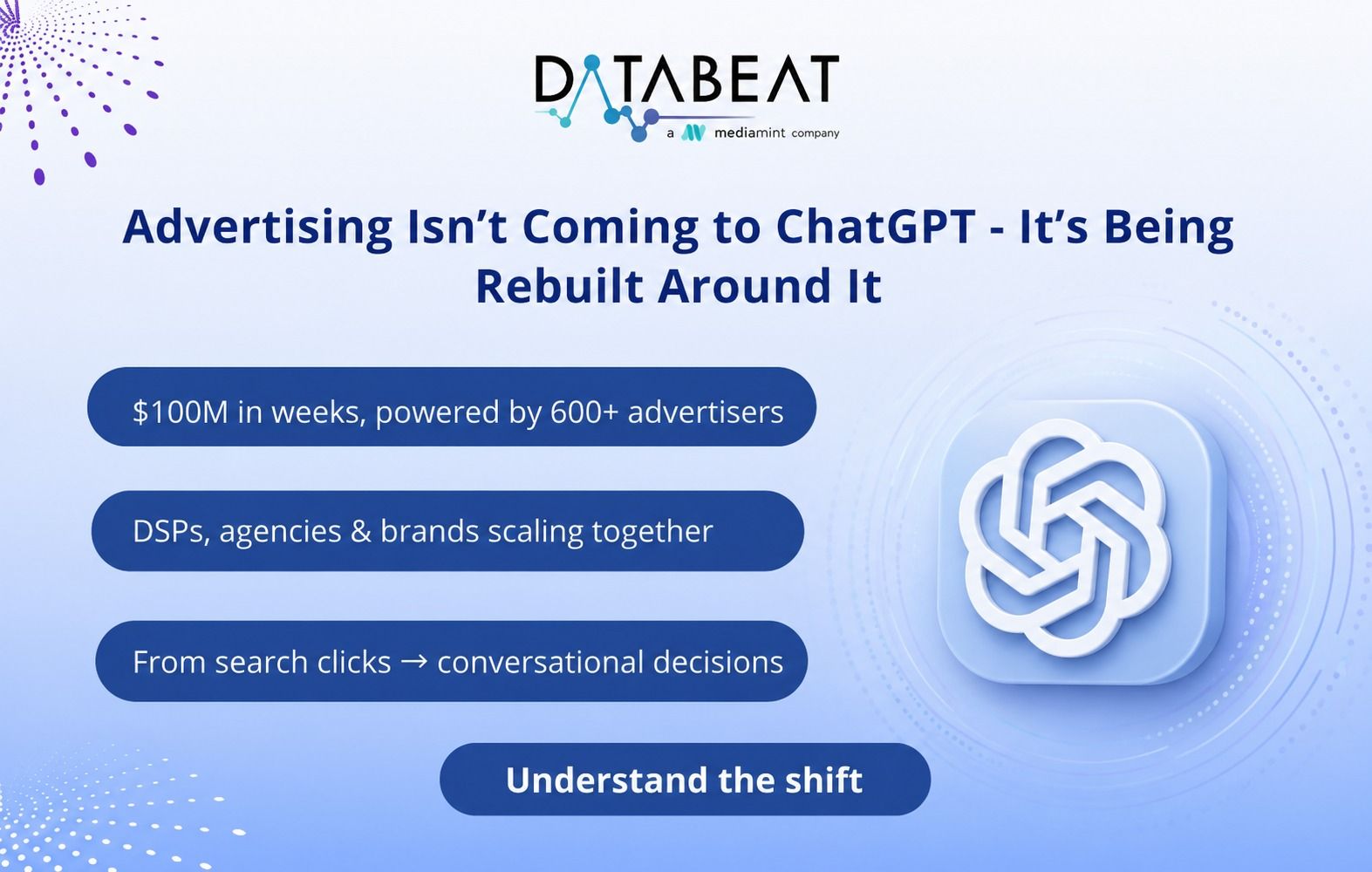
StackAdapt’s leaked playbook offers a glimpse into how ads for ChatGPT might work, but it’s just one piece of a much larger and rapidly evolving ecosystem. ChatGPT ads crossed $100M in annualized revenue within six weeks of launch, with 600+ active advertisers.
OpenAI is not building this advertising channel alone – it is building a network of DSPs, agencies, brands and adtech platforms to scale monetization fast.
The First Wave of AdTech Partners
StackAdapt may be the most visible partner at the moment, but they are not the only one. The confirmed technology partner roster includes Adobe, Criteo, Kargo, Pacvue, and StackAdapt.Criteo is among the first adtech partners to be confirmed as part of ChatGPT’s advertising pilot integration, helping connect brands to conversational ad placements.
Smartly is partnering with OpenAI to create interactive, conversational ad formats, ads that operate more like chatbots than banners.
This suggests a clear strategy: “OpenAI is not reinventing the wheel, but rather tapping into the existing programmatic ecosystem.
Agencies and Holding Companies Are Already In
The major holding networks secured early access before the channel matured – activating clients across retail, travel, and CPG with structured testing frameworks and budget mandates.
This is how every major digital channel has scaled:
- Agencies test early
- Show Return on Investment
- then unlock the broader brand adoption
The Brands Testing Out Ads on ChatGPT
The types of brands that are part of early pilots are very telling. They tend to be premium, intent-driven, and utility-focused.
Some of the favorite names are:
- Target: finding products based on what users ask for
- Adobe is pushing AI tools like Firefly.
- Getting people to sign up and find new content
- HelloFresh is a meal planning solution. HelloFresh CMO framed it as moving from a “search and click” world to an “ask and converse” world
- Williams-Sonoma sells home and kitchen goods.
These aren’t ads that make you want to buy right away. They are brands that gain from:
Journeys based on research
- Purchases that need a lot of thought
- Recommendations based on context
- That fits perfectly with ChatGPT’s “decision layer” position.
A Shift in Media Power: From Platforms to Interfaces
What makes this moment interesting is how it changes the way people compete.
ChatGPT isn’t just competing with one channel; it overlaps with a few:
- Search (intent capture, which Google has always been good at)
- Social (discovery, with Meta in charge)
- Retail media (conversion, mostly Amazon)
ChatGPT makes a new kind of media surface by combining conversation, intent, and personalization. This is a place where:
- Language, not cookies, drives targeting.
- Creative becomes flexible and dynamic
- Ads can change into things you can do.
The Emerging Format Wars: Static vs Conversational Ads
Not everyone agrees on how ChatGPT ads should look.
There are already two directions that are competing with each other:
1. Native, Static Placements (Right Now)
- Paid listings in answers
- Matching based on prompts in context
- Like search ads, but part of a conversation
2. Ads that talk to you (Next Wave)
- Smartly and other players are in charge.
- Ads that respond, ask questions, and guide decisions
- Basically, ChatGPT has branded AI agents.
This second model could change advertising in a big way, from how messages are sent to how people interact with them.
Not Everyone Is On Board
It’s worth noting that not all AI companies are advertising
For instance, as OpenAI launched ads, Anthropic was simultaneously running Super Bowl ads positioning itself as the ad-free alternative – a genuine strategic fork worth noting without editorializing.
This shows a main conflict in the area:
- Making money vs. being neutral
- Personalization versus privacy
- Usefulness vs. making money
What This Means for the Media Landscape
The fact that more than one media player is involved means that this is more than just the launch of one ad product.
It means that:
- AI interfaces are turning into full-fledged media channels.
- Programmatic pipes will reach into places where people talk to each other.
- Agencies and DSPs will fight to “own” AI demand.
Conclusion :
StackAdapt’s playbook may have shown the “how,” but the bigger picture shows the “who,” and it’s a who’s who of the advertising world. As more people, from DSPs to holding companies to global brands, get involved, ChatGPT is quickly changing from an experimental ad surface into something much bigger:
A new media channel that is made for AI and has its own rules, formats, and power dynamics.