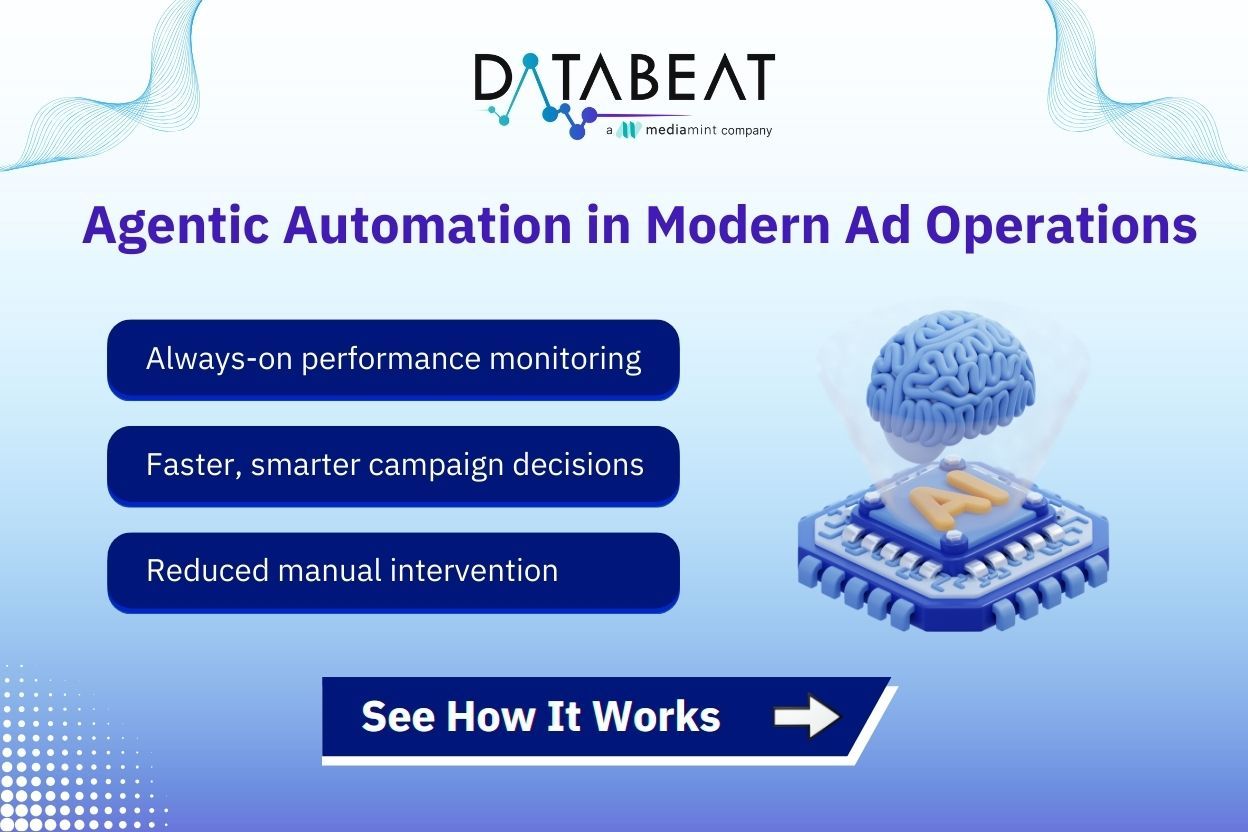
People often talk about agentic systems in ad tech as if they’re some abstract layer of automation, but in practice, they’re pretty straightforward. They exist because advertising moves too fast for humans to constantly keep up, especially once campaigns are live.
Instead of checking numbers once or twice a day, these systems are always watching what’s happening. They’re pulling data from buying platforms, performance dashboards, creative results, and revenue reports at the same time. What matters isn’t any single metric on its own, but how changes stack up. A small increase in costs might not mean much until you see it paired with weaker engagement or faster-than-planned spend.
That’s usually where the system steps in. If spending is accelerating too quickly, bids might be nudged down. If one channel is quietly outperforming the rest, the budget can drift in that direction. If a creative has clearly stopped working, it gets swapped out. None of this is dramatic on its own, but the speed is what makes the difference. Every adjustment feeds back into the system, so it gets better at recognizing the same patterns later.
To do this well, the system has to look at a lot of signals at once. Auction activity, user behavior, win and loss history, performance by placement, and signs of low-quality traffic all play a role. Looking at these in isolation doesn’t help much. Looking at them together is where automation starts to earn its keep.
What Is “Agentic” Automation?
Agentic automation takes automation to the next level.
Rather than just following preset instructions, agentic systems behave more like independent assistants. They can:
- Monitor live performance data
- Decide what actions are needed
- Make changes without waiting for human input
- Improve their decisions based on results
When people say “agentic” automation, what they really mean is that the system doesn’t wait to be told what to do every time. Traditional automation follows rules. Agentic systems make judgments within boundaries. They notice when something drifts, decide whether it matters, and act without someone having to approve every move. Over time, they also learn which decisions tend to pay off and which ones don’t.
Smarter Campaign Planning:
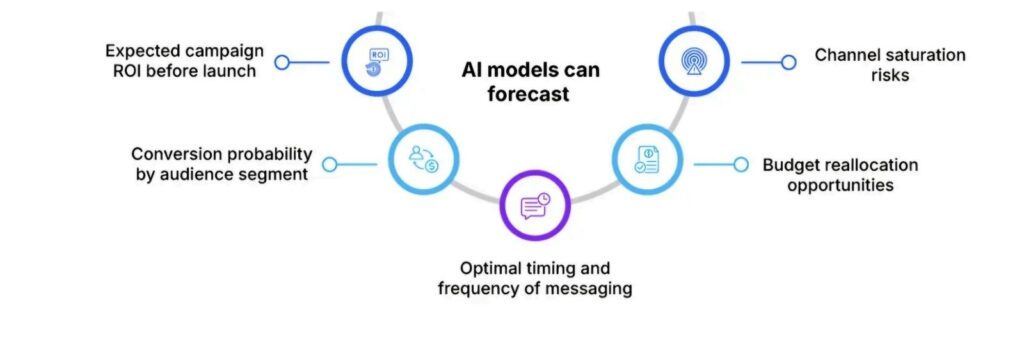
This shows up most clearly in planning. When you can actually see how past campaigns behaved across audiences, formats, and channels, planning becomes less guesswork. Teams stop setting goals that look good in a slide deck but fall apart in execution. It also cuts down on avoidable mistakes, wrong bids, mismatched targeting, and setup issues that usually come from rushing or copying old campaigns.
- Budget reallocation opportunities
- Channel saturation risks
- Expected campaign ROI before launch
- Conversion probability by audience
- Optimal timing and frequency of messaging
Faster Creative Optimization :
Creative work benefits, too. Ads wear out quickly, especially at scale. Agentic systems help by constantly testing variations and shifting delivery based on what’s getting attention right now. When generative tools are added into the mix, teams can try more ideas without turning creative production into a bottleneck.
Auction-Level Bid Management:
Bidding is another area where humans simply can’t compete with machines. Auctions happen in milliseconds, and conditions change constantly. Agentic bidding systems react to what’s in front of them-competition, user signals, and context rather than relying on static assumptions. That usually leads to tighter spend control and fewer surprises when budgets are reviewed.
Troubleshooting the issue :
Reporting and troubleshooting also become less painful. Instead of waiting for a report to tell you something went wrong yesterday, the system flags unusual behavior as it happens. If performance drops, it doesn’t just point to one metric. It looks across creatives, traffic quality, platform changes, and delivery patterns to narrow down what’s likely causing the issue.
Final Thoughts
At the end of the day, agentic systems aren’t here to replace people. They handle the constant monitoring and small decisions that drain time and attention. That frees teams up to focus on strategy, creative thinking, and long-term direction things automation still isn’t good at. That’s why the teams that get the most value usually start small. They automate one area, watch it closely, and expand once trust is built. Clear limits and oversight matter, not because the system can’t operate on its own, but because it needs to operate in line with business goals.
As advertising continues to become more automated, the real advantage won’t come from using these systems. It’ll come from knowing how to work with them.
How can DataBeat help?
Advertising work can get messy. There are many systems to watch, and small problems are easy to miss. DataBeat helps by taking some of that daily pressure off teams and making routine work easier to handle.
With automation tools like CueBeat ads.txt validator, teams don’t have to keep checking everything manually. It helps them notice changes early and react faster when something needs attention.
By reducing day-to-day tracking and manual follow-ups and workflows, cutting down on unnecessary monitoring, and streamlining daily processes, we help publishers to focus on what matters most, save time, and keep better control of their operations. We recently introduced Mia, our Agentic Intelligence platform built to augment your team’s capabilities by blending agentic automation with human intelligence to support across sales, marketing, and media teams, acting as an execution layerss run healthier in the long run.